Sports injuries pose a significant challenge for athletes, not only due to pain or temporary inactivity, but also because of concerns about loss of fitness or recurrence after a full return to sport. With the advancement of sports medicine, the concept of regenerative medicine has emerged as a modern approach aimed at supporting tissue healing and improving the overall quality of recovery.
Regenerative medicine encompasses a range of techniques that aim to stimulate the body to repair damaged tissues, rather than focusing solely on symptom relief. These include stem cell therapy, platelet-rich plasma (PRP) therapy, and biological therapies. The speed of recovery from sports injuries depends on several factors, including the type of injury, the severity
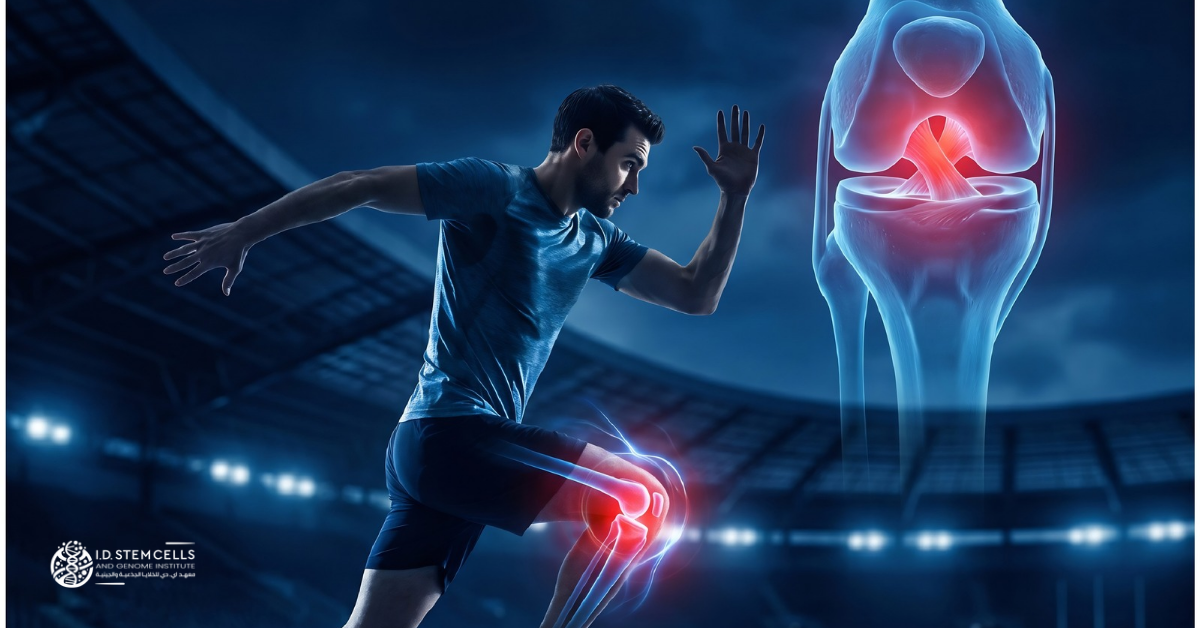
of tissue damage, the efficiency of blood circulation, the athlete's age, and the quality of the rehabilitation program. In some sports injuries, such as cartilage or tendon injuries, the tissue's regenerative capacity is relatively limited, which can prolong the recovery period or increase the risk of re-injury. Recently, attention has turned to regenerative therapies, which may help accelerate the healing of sports injuries and reduce complications compared to traditional treatments.
This is achieved through several mechanisms, including:
Reducing inflammation within tissues.
Supporting the secretion of growth factors and immune complexes such as IL-10, TGF-β, and VEGF.
Improving the healing environment.
Supporting the regeneration of certain cells and tissues.
Enhancing functional recovery.
In the field of stem cell therapy, there is growing interest in using mesenchymal stem cells due to their immunological and regenerative properties, which may help support the healing of injured sports tissues.
This is achieved through several mechanisms, including:
1. Reducing inflammation within tissues.
2. Supporting the secretion of growth factors and immune complexes such as IL-10, TGF-β, and VEGF.
3. Improving the healing environment.
4. Supporting the regeneration of certain cells and tissues.
5. Enhancing functional recovery.
In the field of stem cell therapy, there is growing interest in using mesenchymal stem cells due to their immunological and regenerative properties, which may help support the healing of injured sports tissues.
Some recent studies indicate promising results in using regenerative therapies within treatment programs for tendon, cartilage, ligament, and muscle injuries. Some athletes have shown improvements in pain, mobility, and return to activity when these therapies are combined with specialized rehabilitation programs. However, research is ongoing to determine the best treatment protocols, the optimal timing for intervention, the conditions that benefit most, and the long-term impact on athletic performance. Modern specialized centers rely on integrated treatment plans that combine regenerative therapy, physical therapy, sports nutrition, and functional follow-up.
At the I.D. Stem Cells and Genome Institute, we keep abreast of the latest scientific developments in the field of stem cell and gene therapy and regenerative medicine. If you are interested in learning more about the potential benefits of these treatments and the latest research findings, please feel free to contact us.