Stem cell niches are regions of tissue that provide specific microenvironments, which maintain and enhance the ability of CSCs to self-renew and generate differentiated lineages.
The concept of a stem cell niche was first formulated by Schofield who demonstrated that successful organ transplants could only be successful if they were harvested from bone marrow.
He also proposed that a stem cell niche is essential for determining stem cell fate, where the behavior of stem cells is influenced by their association with other cells within their niche. This concept has been validated by other groups studying different tissues from invertebrate and vertebrate models.
This concept applies to CSCs where interaction with these niches is essential for maintaining CSC populations. The CSC microenvironment is a highly heterogeneous complex consisting of cells such as stromal cells, immune cells, epithelial cells, and a network of extracellular macromolecules that provide support to the cells within the extracellular matrix (EC).
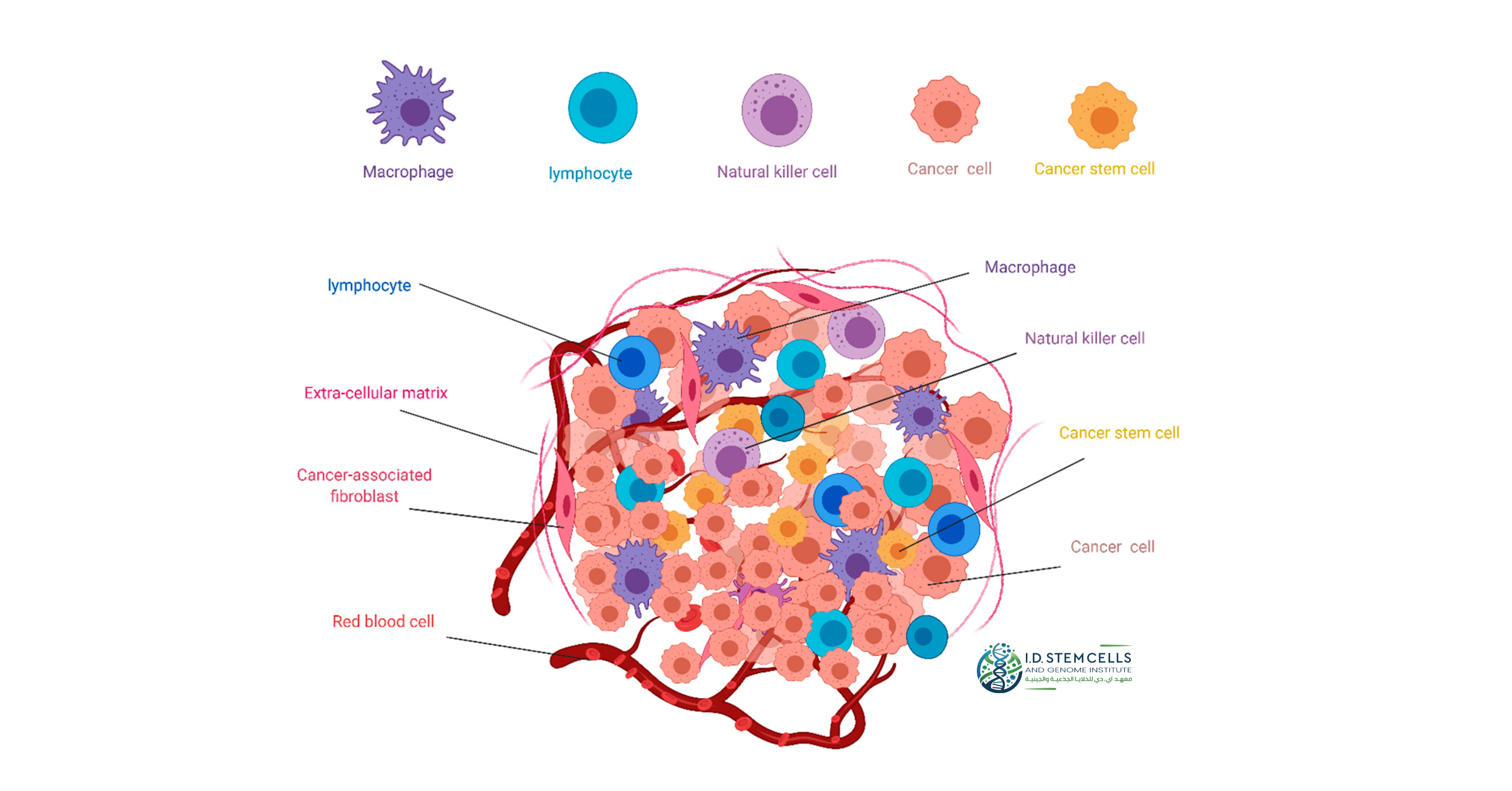
Cells residing in this niche promote the growth, maintenance, and differentiation of CSCs.
Currently, cancer treatments have been less successful because most of these drugs target the bulk of cancer cells, leaving the cancer stem cell populations unaffected.
Therefore, understanding the relationship between cancer stem cells and their microenvironment could help develop more efficient strategies to eliminate cancer stem cells.