In recent years, there has been a notable increase in bone tissue injuries due to various factors, driving scientific research to develop innovative solutions such as bone tissue engineering as an effective alternative to compensate for tissue defects. Despite advancements in traditional bone engineering methods, challenges remain related to biomaterials, cells, and biological factors, paving the way for new therapeutic options that rely on stimulating autologous skeletal stem cells (SSCs) to regenerate bone directly at the injury site, without the need for external cell transplantation.
The Periosteum: A Promising Regenerative Reservoir
The periosteum, located in the outer layer of cortical bone, is considered a promising source for bone regeneration due to its rich reservoir of stem cells and growth-stimulating cytokines.
The Periosteum: A Promising Regenerative Reservoir
The periosteum, located in the outer layer of cortical bone, is considered a promising source for bone regeneration due to its rich reservoir of stem cells and growth-stimulating cytokines. Periosteal skeletal stem cells (P-SSCs) are distinguished by their ability to self-renew and differentiate into multiple cell lineages, making them a key focus of recent studies. Unlike previous research that focused on bone marrow stem cells, recent interest has shifted toward stem cells in the periosteum, particularly with technological advancements in lineage tracing, flow cytometry, and single-cell RNA sequencing (scRNA-seq).
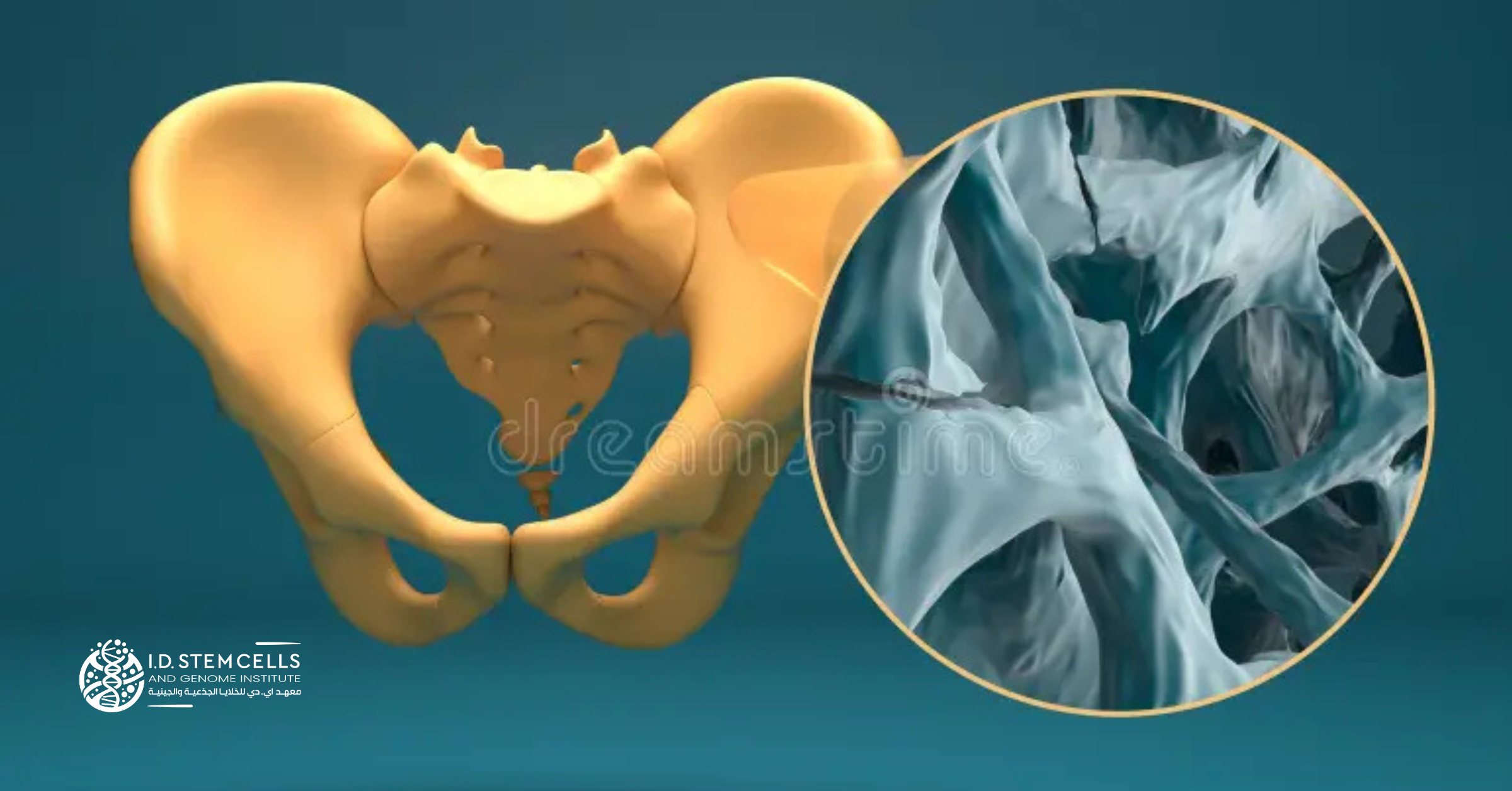
Periosteal skeletal stem cells (P-SSCs) are distinguished by their ability to self-renew and differentiate into multiple cell lineages, making them a key focus of recent studies. Unlike previous research that focused on bone marrow stem cells, recent interest has shifted toward stem cells in the periosteum, particularly with technological advancements in lineage tracing, flow cytometry, and single-cell RNA sequencing (scRNA-seq).
Technological Breakthroughs and Applications
Thanks to these technologies, scientists have been able to identify specific stem cell populations in periosteal regions, isolate them, and proliferate them in vitro using specialized molecular markers. These methods have also allowed the study of their dynamic characteristics in vivo, providing deeper insights into their role in bone repair. For example, recent experiments have shown that autologous stimulation of these cells can accelerate fracture healing by up to 50% compared to traditional methods.
Technological Breakthroughs and Applications
Thanks to these technologies, scientists have been able to identify specific stem cell populations in periosteal regions, isolate them, and proliferate them in vitro using specialized molecular markers. These methods have also allowed the study of their dynamic characteristics in vivo, providing deeper insights into their role in bone repair. For example, recent experiments have shown that autologous stimulation of these cells can accelerate fracture healing by up to 50% compared to traditional methods.
Future Implications and Challenges
These findings suggest that harnessing the intrinsic potential of the periosteum could revolutionize the treatment of complex bone injuries, such as those caused by trauma or degenerative diseases. However, further studies are needed to refine methods for targeting these cells and ensuring their long-term efficacy.
Future Implications and Challenges
These findings suggest that harnessing the intrinsic potential of the periosteum could revolutionize the treatment of complex bone injuries, such as those caused by trauma or degenerative diseases. However, further studies are needed to refine methods for targeting these cells and ensuring their long-term efficacy.
Directing skeletal stem cells in the periosteum represents a promising approach that combines simplicity of use with robust biological responsiveness, positioning it as a potential cornerstone for future orthopedic therapies.