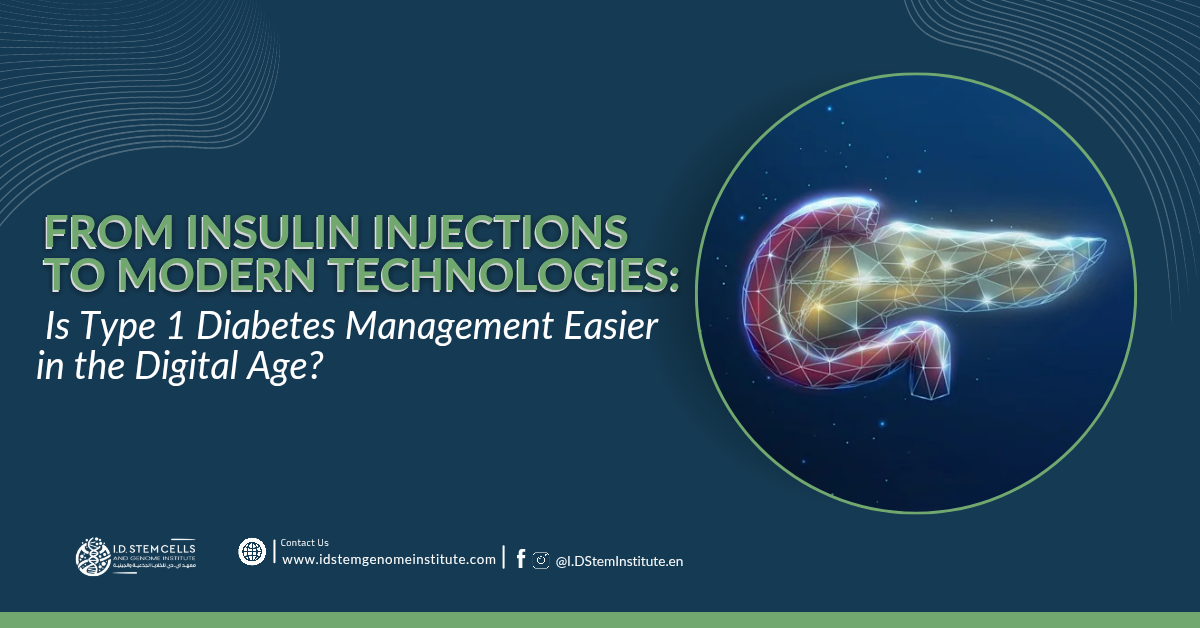
The management of type 1 diabetes (T1DM) has witnessed remarkable progress in recent years thanks to advancements in medical and digital technologies. These technologies no longer focus solely on insulin replacement but also aim to mimic the body's natural glucose regulation, thus reducing the daily burden on patients.
While insulin replacement remains the cornerstone of type 1 diabetes treatment, relying on insulin alone may not be sufficient for optimal control without the use of modern technologies. These technologies have contributed to improved glucose management and enhanced the quality of life for people with diabetes, such as continuous glucose monitoring devices, smart insulin pumps, and automated insulin delivery systems.
First: Continuous Glucose Monitoring (CGM) Devices
These devices represent a significant advancement in diabetes management. They measure glucose levels in real-time, around the clock, using a sensor implanted under the skin, and then automatically transmit the readings to a reader or smartphone app.
Their advantages include:
Continuous glucose monitoring without finger pricks, supporting more accurate treatment decisions.
Alerts for high or low glucose levels, thus reducing episodes of hypoglycemia, especially those that go unnoticed.
Improved control of HbA1c levels, reducing the risk of complications.
First: Continuous Glucose Monitoring (CGM) Devices
These devices represent a significant advancement in diabetes management. They measure glucose levels in real-time, around the clock, using a sensor implanted under the skin, and then automatically transmit the readings to a reader or smartphone app.
Their advantages include:
Continuous glucose monitoring without finger pricks, supporting more accurate treatment decisions.
Alerts for high or low glucose levels, thus reducing episodes of hypoglycemia, especially those that go unnoticed.
Improved control of HbA1c levels, reducing the risk of complications.
Second: Smart Insulin Pumps
These are a more precise and convenient alternative to daily insulin injections. They mimic the physiological secretion of insulin from the pancreas, providing a continuous delivery of insulin doses, with the option of administering additional bolus doses before meals. Their advantages include:
Second: Smart Insulin Pumps
These are a more precise and convenient alternative to daily insulin injections. They mimic the physiological secretion of insulin from the pancreas, providing a continuous delivery of insulin doses, with the option of administering additional bolus doses before meals. Their advantages include:
Greater flexibility in adjusting doses according to activity and meals.
Reduced risk of hypoglycemia (low blood sugar).
Suitable for children and individuals with significant fluctuations in glucose levels.
Some pumps are compatible with a continuous glucose monitor (CGM) for automatic dosing.
Improved quality of life and reduced burden of daily treatment for many patients.
Third: Automated Insulin Delivery (AID) Systems
These are among the latest technologies currently available. They combine an insulin pump, a continuous glucose monitor (CGM), and intelligent algorithms that automatically control the dose. This system functions as a near-complete system that partially mimics the function of the pancreas, automatically adjusting insulin doses based on real-time glucose readings. AID systems are suitable for both children and adults, especially those with unstable blood glucose control.
Studies have shown that these systems improve long-term glucose control and reduce the mental burden associated with daily diabetes management, while also providing greater protection against hypoglycemia. Furthermore, scientific reviews indicate that the use of CGM and insulin pumps may have long-term benefits in reducing cardiovascular risk.
At the I.D. Stem Cells and Genome Institute, we keep abreast of the latest scientific developments in the field of stem cell and gene therapy and regenerative medicine. If you are interested in learning more about the potential benefits of these treatments and the latest research findings, please feel free to contact us.
Third: Automated Insulin Delivery (AID) Systems
These are among the latest technologies currently available. They combine an insulin pump, a continuous glucose monitor (CGM), and intelligent algorithms that automatically control the dose. This system functions as a near-complete system that partially mimics the function of the pancreas, automatically adjusting insulin doses based on real-time glucose readings. AID systems are suitable for both children and adults, especially those with unstable blood glucose control.
Studies have shown that these systems improve long-term glucose control and reduce the mental burden associated with daily diabetes management, while also providing greater protection against hypoglycemia. Furthermore, scientific reviews indicate that the use of CGM and insulin pumps may have long-term benefits in reducing cardiovascular risk.
At the I.D. Stem Cells and Genome Institute, we keep abreast of the latest scientific developments in the field of stem cell and gene therapy and regenerative medicine. If you are interested in learning more about the potential benefits of these treatments and the latest research findings, please feel free to contact us.