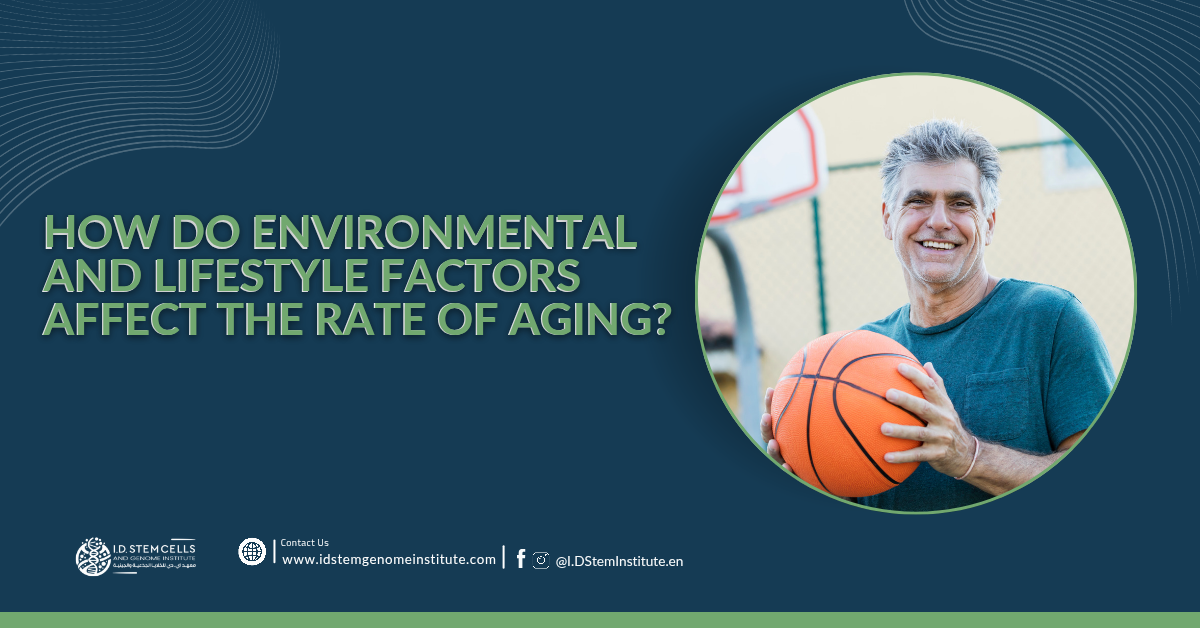
Aging is a natural biological process that all cells in the body undergo. However, the rate at which signs of aging appear varies from person to person. While some people age slowly and maintain youthful skin and bodies, others suffer from premature signs of aging despite their young age. What is the reason?Recent studies indicate that the environment and lifestyle play a greater role than genetics in determining the rate at which a person ages and the appearance of age-related health deterioration symptoms.
Environmental Factors and Their Role in Accelerating Aging
Environmental factors include air pollution, continuous sun exposure, psychological and economic stressors, and others. Excessive sun exposure, especially ultraviolet (UV) radiation without protection,
Environmental Factors and Their Role in Accelerating Aging
Environmental factors include air pollution, continuous sun exposure, psychological and economic stressors, and others. Excessive sun exposure, especially ultraviolet (UV) radiation without protection, accelerates the breakdown of collagen and elastin in the skin, leading to a loss of skin elasticity and the appearance of signs of aging such as wrinkles, sagging skin, and loss of radiance. Furthermore, air polluted with chemicals and fine particles, and chronic exposure to pollution and toxins, raise levels of free radicals, which cause DNA damage, impair cellular regeneration, and accelerate the aging process.

accelerates the breakdown of collagen and elastin in the skin, leading to a loss of skin elasticity and the appearance of signs of aging such as wrinkles, sagging skin, and loss of radiance. Furthermore, air polluted with chemicals and fine particles, and chronic exposure to pollution and toxins, raise levels of free radicals, which cause DNA damage, impair cellular regeneration, and accelerate the aging process.
Lifestyle and its Impact on Biological Age
Among the most prominent lifestyle factors that affect the rate of aging are smoking, poor diet, lack of physical activity, and obesity. Smoking reduces oxygen flow to skin cells and weakens cellular repair processes, leading to paleness and premature wrinkles. It also increases the risk of many age-related diseases, such as heart and lung diseases. Studies have shown that consuming processed foods high in unhealthy fats and sugars increases chronic inflammation and oxidative damage in the body. Conversely, a balanced diet rich in antioxidant-rich fruits and vegetables, along with regular physical activity, can slow cellular aging and delay the onset of chronic age-related diseases. Good, regular sleep also promotes the production of hormones responsible for cell regeneration. Chronic sleep deprivation, on the other hand, can lead to increased cortisol levels and accelerate cell damage. Furthermore, psychological factors such as stress, anxiety, and financial and social difficulties play a role in accelerating brain aging and making the body more susceptible to functional decline.
Lifestyle and its Impact on Biological Age
Among the most prominent lifestyle factors that affect the rate of aging are smoking, poor diet, lack of physical activity, and obesity. Smoking reduces oxygen flow to skin cells and weakens cellular repair processes, leading to paleness and premature wrinkles. It also increases the risk of many age-related diseases, such as heart and lung diseases. Studies have shown that consuming processed foods high in unhealthy fats and sugars increases chronic inflammation and oxidative damage in the body. Conversely, a balanced diet rich in antioxidant-rich fruits and vegetables, along with regular physical activity, can slow cellular aging and delay the onset of chronic age-related diseases. Good, regular sleep also promotes the production of hormones responsible for cell regeneration. Chronic sleep deprivation, on the other hand, can lead to increased cortisol levels and accelerate cell damage. Furthermore, psychological factors such as stress, anxiety, and financial and social difficulties play a role in accelerating brain aging and making the body more susceptible to functional decline.
Adopting a healthy lifestyle and paying attention to improving environmental factors has a significant impact on slowing down the aging process. This opens up great prospects in the field of rejuvenation and aging treatment using stem cell technologies that take advantage of these environmental modifications to improve treatment outcomes and promote long-term health. At the I.D. Stem Cells and Genome Institute, we keep abreast of the latest scientific developments in the field of stem cell and gene therapy and regenerative medicine. If you are interested in learning more about the potential benefits of these treatments and the latest research findings, please feel free to contact us.