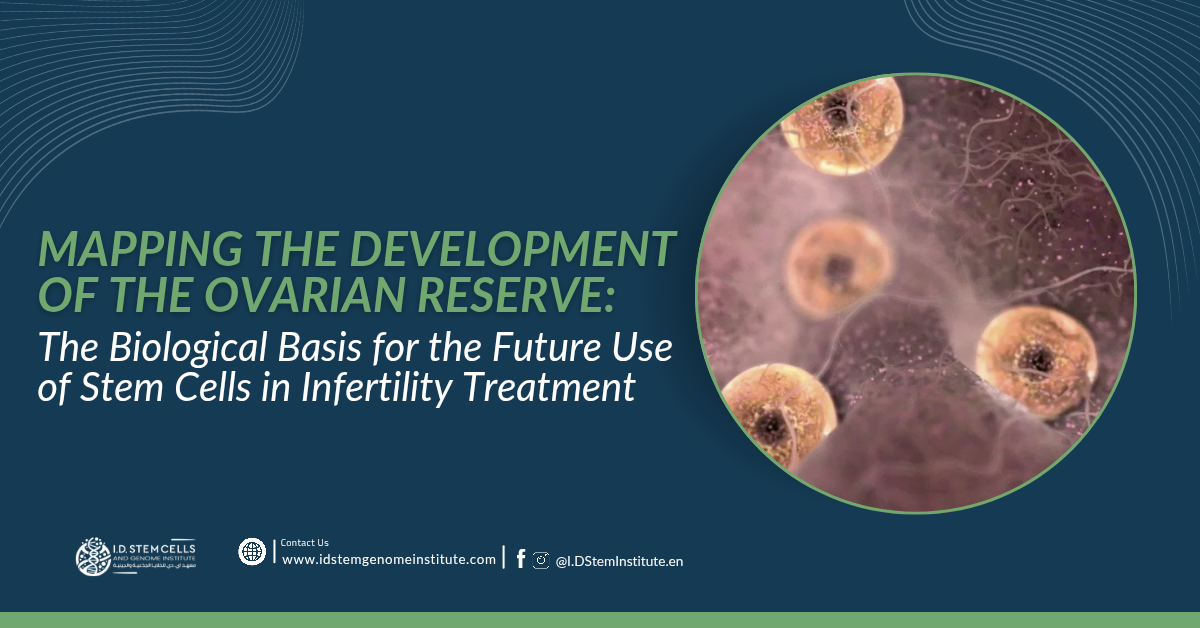
The ovarian reserve is the fundamental component that determines female fertility. It consists of immature germ cells trapped within the primordial follicles.
Recent research has focused on discovering and understanding the mechanisms of ovarian reserve development using precise techniques. This detailed understanding not only aims to explain the causes of diminished ovarian reserve or premature ovarian failure but is also a crucial step in identifying the temporal and molecular points at which stem cell technologies can intervene in the future. This opens promising avenues for using stem cells to treat infertility in women.
Biological Development of the Ovarian Reserve
The ovarian reserve is formed during late embryonic life, when primordial germ cells transition from meiotic prophase I to dicty arrest within the primordial follicles. These non-growing oocytes represent a limited reserve that is not replenished by the woman's own germ cells after birth,
Biological Development of the Ovarian Reserve
The ovarian reserve is formed during late embryonic life, when primordial germ cells transition from meiotic prophase I to dicty arrest within the primordial follicles. These non-growing oocytes represent a limited reserve that is not replenished by the woman's own germ cells after birth, unlike what occurs in the male testis. The physiological decline in the ovarian reserve results from the continuous activation of a small percentage of primordial follicles via regulatory pathways such as PI3K-AKT. These follicles transition from a dormant state to growth phases during a woman's reproductive years. However, this depletion of the oocyte reserve is irreversible, and there is no physiological replenishment of follicles after birth. With advancing age, the ovarian reserve gradually decreases due to the continued activation of some primordial oocytes and the death of a large number of them through apoptosis (programmed cell death). This leads to a gradual decline in fertility until menopause.
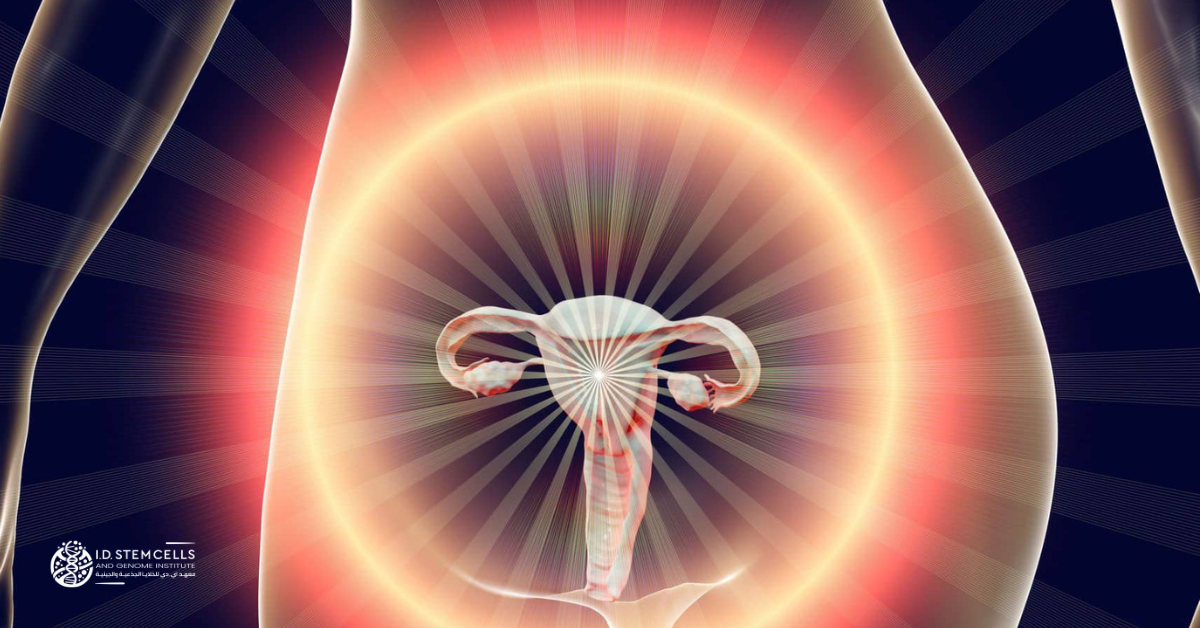
unlike what occurs in the male testis. The physiological decline in the ovarian reserve results from the continuous activation of a small percentage of primordial follicles via regulatory pathways such as PI3K-AKT. These follicles transition from a dormant state to growth phases during a woman's reproductive years. However, this depletion of the oocyte reserve is irreversible, and there is no physiological replenishment of follicles after birth. With advancing age, the ovarian reserve gradually decreases due to the continued activation of some primordial oocytes and the death of a large number of them through apoptosis (programmed cell death). This leads to a gradual decline in fertility until menopause.
When can stem cells be used effectively?
Before Functional Failure (Early Prevention)
In cases genetically predisposed to ovarian failure or prior to chemotherapy, a stem cell-based intervention may be used to support the ovarian microenvironment. Stem cells protect follicles from oxidative stress, reduce apoptosis (programmed cell death), and enhance signaling that supports follicular survival.
During Partial Functional Failure
When dormant follicles remain unactivated, molecular pathways can be targeted to induce controlled follicular activation using mesenchymal stem cells or their derivatives, such as exosomes. This aims to modulate the ovarian microenvironment and improve blood perfusion.
After Complete Depletion of Ovarian Reserve
This stage presents the greatest research challenge. It may require reprogramming somatic cells into iPSCs (indigenous pluripotent stem cells) and then guiding them in vitro toward a germline pathway resembling early embryonic stages, while accurately mimicking natural molecular signaling.
When can stem cells be used effectively?
Before Functional Failure (Early Prevention)
In cases genetically predisposed to ovarian failure or prior to chemotherapy, a stem cell-based intervention may be used to support the ovarian microenvironment. Stem cells protect follicles from oxidative stress, reduce apoptosis (programmed cell death), and enhance signaling that supports follicular survival.
During Partial Functional Failure
When dormant follicles remain unactivated, molecular pathways can be targeted to induce controlled follicular activation using mesenchymal stem cells or their derivatives, such as exosomes. This aims to modulate the ovarian microenvironment and improve blood perfusion.
After Complete Depletion of Ovarian Reserve
This stage presents the greatest research challenge. It may require reprogramming somatic cells into iPSCs (indigenous pluripotent stem cells) and then guiding them in vitro toward a germline pathway resembling early embryonic stages, while accurately mimicking natural molecular signaling.
Uncovering the developmental map of the ovarian reserve represents a fundamental shift in our understanding of fertility biology. This understanding is the basis that will determine when and how stem cells can be effectively used in the treatment of infertility resulting from depletion of the ovarian reserve, whether by supporting dormant follicles, reactivating the ovarian environment, or even mimicking the early stages of germ cell formation. Full clinical applications are still under development.
At the I.D. Stem Cells and Genome Institute, we keep abreast of the latest scientific developments in the field of stem cell and gene therapy and regenerative medicine. If you are interested in learning more about the potential benefits of these treatments and the latest research findings, please feel free to contact us.