In an era of astonishing scientific advancements, personalized medicine is emerging as one of the most prominent pillars reshaping the future of healthcare, aiming to design treatments tailored to each individual's unique characteristics, whether genetic, environmental, or even lifestyle. At the heart of this revolutionary transformation are stem cells, an indispensable vital tool, opening up unprecedented prospects for precise diagnosis and targeted therapies.
Stem Cells: The Key to Understanding Diseases Accurately
The exceptional power of stem cells, particularly the type known as induced pluripotent stem cells (iPSCs), lies in their ability to replicate diseases in the laboratory using the patient's own cells.
Stem Cells: The Key to Understanding Diseases Accurately
The exceptional power of stem cells, particularly the type known as induced pluripotent stem cells (iPSCs), lies in their ability to replicate diseases in the laboratory using the patient's own cells. By taking a simple sample of skin or blood cells, scientists can reprogram these cells into stem cells capable of transforming into any type of tissue in the body. These cells thus become a living model for studying diseases, such as heart or neurological disease, while taking into account the patient's unique genetic makeup, enabling a deep understanding of disease mechanisms at the cellular and molecular levels.
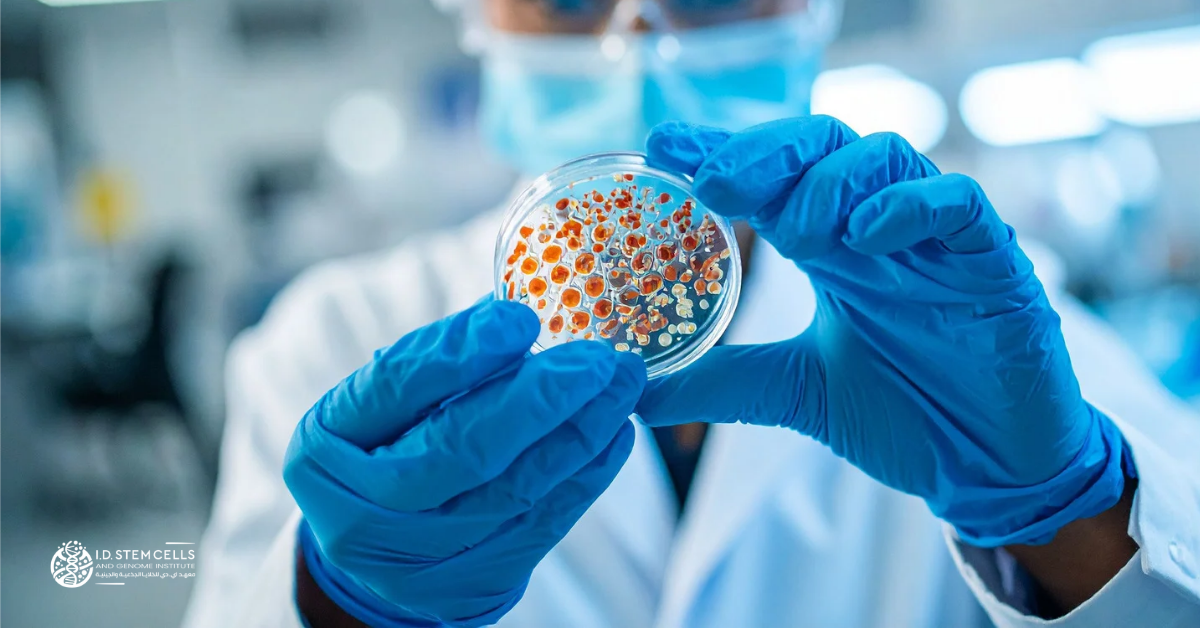
By taking a simple sample of skin or blood cells, scientists can reprogram these cells into stem cells capable of transforming into any type of tissue in the body. These cells thus become a living model for studying diseases, such as heart or neurological disease, while taking into account the patient's unique genetic makeup, enabling a deep understanding of disease mechanisms at the cellular and molecular levels.
Gene Editing: Correcting Genetic Errors with a Scientific Touch
Thanks to advanced gene editing technologies, such as CRISPR-Cas9, it is now possible to correct disease-causing genetic mutations in stem cells extracted from a patient. This achievement is not limited to studying diseases; it also paves the way for personalized gene therapies, where the modified cells are transplanted back into the patient's body to replace damaged cells or restore their function. Imagine treating an incurable genetic disease simply by repairing the defective gene in your own cells.
Gene Editing: Correcting Genetic Errors with a Scientific Touch
Thanks to advanced gene editing technologies, such as CRISPR-Cas9, it is now possible to correct disease-causing genetic mutations in stem cells extracted from a patient. This achievement is not limited to studying diseases; it also paves the way for personalized gene therapies, where the modified cells are transplanted back into the patient's body to replace damaged cells or restore their function. Imagine treating an incurable genetic disease simply by repairing the defective gene in your own cells.
Molecular Fingerprinting: Diagnosing Diseases with Unprecedented Precision
The contributions of stem cells don't stop at treatment; they extend to the field of early diagnosis. By transforming a patient's cells into cell types associated with a specific disease (such as brain cells in cases of Alzheimer's), scientists can detect unique biomarkers that reflect the progression of the disease or its response to treatment. This "molecular fingerprint" enables highly accurate monitoring of health conditions and represents a quantum leap in early disease detection and personalized treatment tracking.
Stem cells are not just a scientific tool; they are a bridge between the complexities of human genetics and the possibilities of modern medicine. Combined with technologies such as gene editing and artificial intelligence, we are approaching a medical era where treatments are "tailored" based on your DNA and individual characteristics.
Molecular Fingerprinting: Diagnosing Diseases with Unprecedented Precision
The contributions of stem cells don't stop at treatment; they extend to the field of early diagnosis. By transforming a patient's cells into cell types associated with a specific disease (such as brain cells in cases of Alzheimer's), scientists can detect unique biomarkers that reflect the progression of the disease or its response to treatment. This "molecular fingerprint" enables highly accurate monitoring of health conditions and represents a quantum leap in early disease detection and personalized treatment tracking.
Stem cells are not just a scientific tool; they are a bridge between the complexities of human genetics and the possibilities of modern medicine. Combined with technologies such as gene editing and artificial intelligence, we are approaching a medical era where treatments are "tailored" based on your DNA and individual characteristics.