In recent years, the term "tissue-engineered ovary" has become a prominent topic in experimental research in reproductive and regenerative medicine. These innovations rely on a combination of pluripotent stem cells and three-dimensional tissue engineering techniques, raising a profound scientific question: Can a stem cell-derived bioengineered ovarian model be developed that mimics the hormonal and reproductive functions of the human ovary?
What is an Artificial Ovarian?
An artificial ovary is a tissue structure that mimics the ovary's function in producing eggs or, at the very least, in supporting egg maturation and hormone secretion. These models aim to design a network of induced
What is an Artificial Ovarian?
An artificial ovary is a tissue structure that mimics the ovary's function in producing eggs or, at the very least, in supporting egg maturation and hormone secretion. These models aim to design a network of induced pluripotent stem cells (iPSCs) or adult stem cells (MSCs) with supporting cells such as follicular and ovarian nutritive cells, all within a scaffold that replicates the mechanical and chemical environment of natural ovarian tissue.
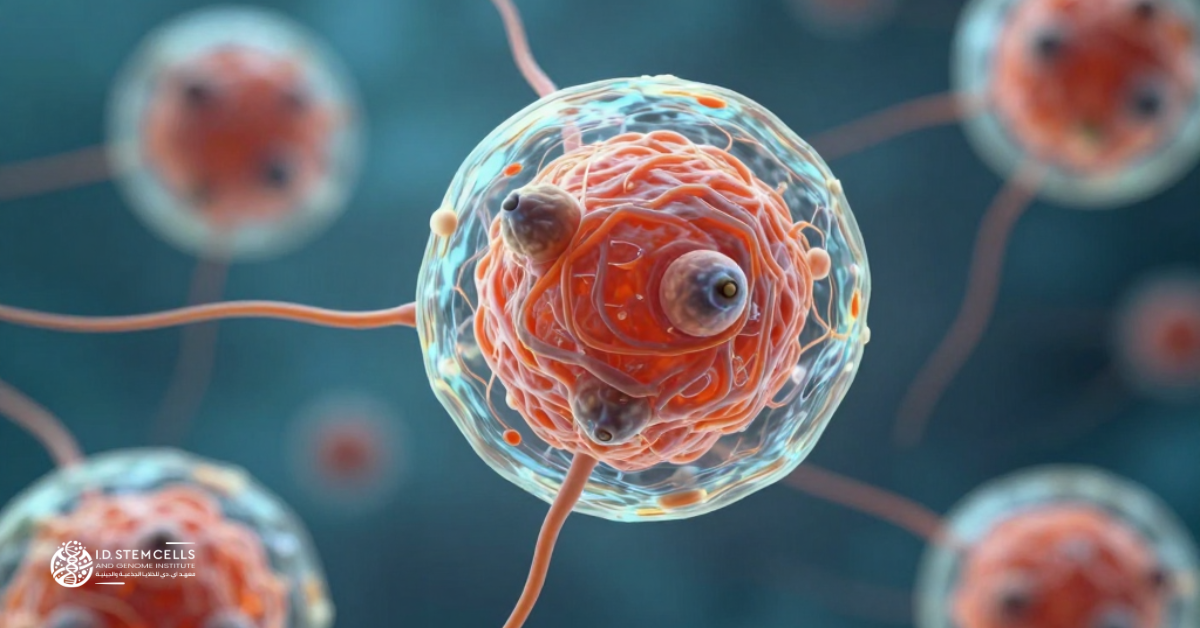
pluripotent stem cells (iPSCs) or adult stem cells (MSCs) with supporting cells such as follicular and ovarian nutritive cells, all within a scaffold that replicates the mechanical and chemical environment of natural ovarian tissue.
The Role of Stem Cells in Reproductive Cell Formation
Recent studies have shown that induced pluripotent stem cells (iPSCs) can be stimulated to become primitive reproductive cells and then mature, fertilizable eggs under controlled laboratory conditions. These transformations depend on:
Reprogramming skin or blood cells into induced pluripotent stem cells.
Directing these induced pluripotent stem cells to differentiate into primordial germ cells.
Transferring them to an environment resembling ovarian follicle cells to complete egg maturation.
The Role of Stem Cells in Reproductive Cell Formation
Recent studies have shown that induced pluripotent stem cells (iPSCs) can be stimulated to become primitive reproductive cells and then mature, fertilizable eggs under controlled laboratory conditions. These transformations depend on:
Reprogramming skin or blood cells into induced pluripotent stem cells.
Directing these induced pluripotent stem cells to differentiate into primordial germ cells.
Transferring them to an environment resembling ovarian follicle cells to complete egg maturation.
How can a three-dimensional ovarian environment be constructed using tissue engineering?
Tissue engineering is the backbone of the artificial ovary concept. Key components used include:
Stem cells or germ cells differentiated from iPSCs.
Scaffold support structures made of biocompatible materials that mimic the natural structure of the ovary and are biodegradable, such as hydrogel or bioinks. 3. Growth factors and chemical signals that mimic the natural ovarian environment (such as IGF-1, VEGF, AMH, and FSH) stimulate angiogenesis and tissue regeneration.
These elements are implanted together in three-dimensional models (organoids or bioprinted structures), where small ovarian structures are formed that exhibit some capacity for follicular maturation and oocyte formation. Recent research has confirmed the effectiveness of these bioprinted structures in combating ovarian injury and chemotherapy-induced infertility, as they provide an ideal environment for stem cell growth.
How can a three-dimensional ovarian environment be constructed using tissue engineering?
Tissue engineering is the backbone of the artificial ovary concept. Key components used include:
Stem cells or germ cells differentiated from iPSCs.
Scaffold support structures made of biocompatible materials that mimic the natural structure of the ovary and are biodegradable, such as hydrogel or bioinks. 3. Growth factors and chemical signals that mimic the natural ovarian environment (such as IGF-1, VEGF, AMH, and FSH) stimulate angiogenesis and tissue regeneration.
These elements are implanted together in three-dimensional models (organoids or bioprinted structures), where small ovarian structures are formed that exhibit some capacity for follicular maturation and oocyte formation. Recent research has confirmed the effectiveness of these bioprinted structures in combating ovarian injury and chemotherapy-induced infertility, as they provide an ideal environment for stem cell growth.
It can be argued that these strategies, combining stem cells and extracellular matrix, open up promising avenues for creating a three-dimensional ovary that mimics the natural function of the human ovary. Future directions in developing this approach focus on: improving the efficiency of induced pluripotent stem cells (iPSCs) in converting them into mature oocytes; developing three-dimensional tissue structures with artificial blood supply systems; and integrating this technology with existing cell therapies.
At the I.D. Stem Cells and Genome Institute, we keep abreast of the latest scientific developments in the field of stem cell and gene therapy and regenerative medicine. If you are interested in learning more about the potential benefits of these treatments and the latest research findings, please feel free to contact us.