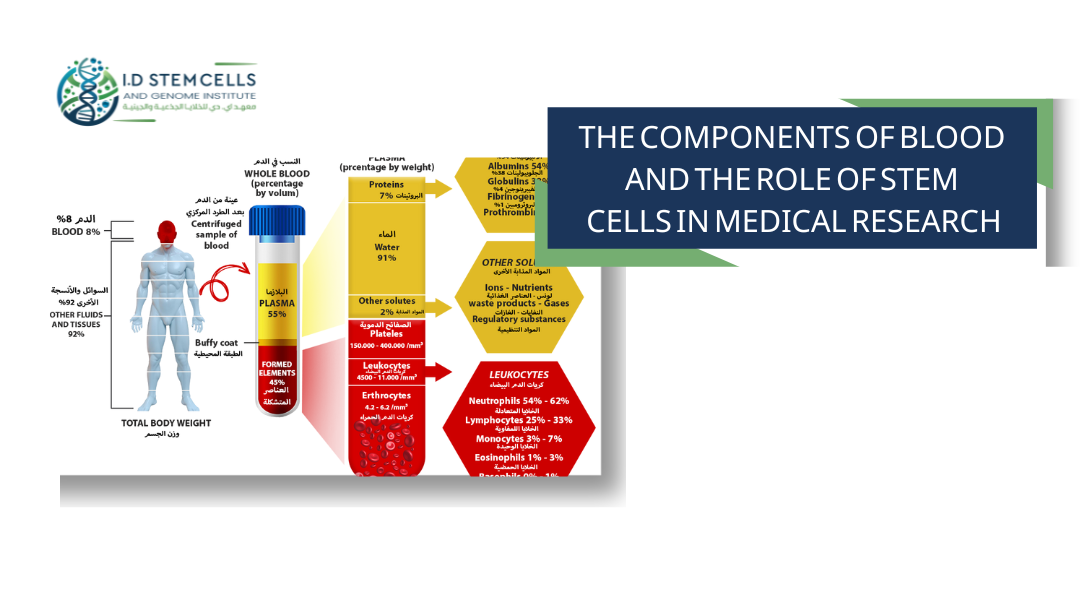
Blood is a vital component of the human body, constituting around 8% of total body weight. It is composed of two main parts: plasma and formed elements. Understanding the structure and function of blood components is critical, especially when considering the potential therapeutic applications of stem cells in medical research. Stem cells have revolutionized our approach to treating various diseases by offering regenerative capabilities, particularly when it comes to blood-related disorders.
Main Components of Blood
1- Plasma (55% of Blood Volume): Plasma is a yellowish liquid that makes up 55% of the total blood volume. It consists primarily of:
-
Water (91%): The largest component of plasma, essential for transporting nutrients, hormones, and waste products.
-
Proteins (7%): Key proteins include:
-
Albumins (54%): Help maintain blood volume and pressure.
-
Globulins (38%): Play a critical role in the immune response.
-
Fibrinogen (4%): Involved in blood clotting.
-
Prothrombin (1%): Another important clotting factor.
-
-
Other solutes (2%): These include ions, nutrients, waste products, gases, and regulatory substances.
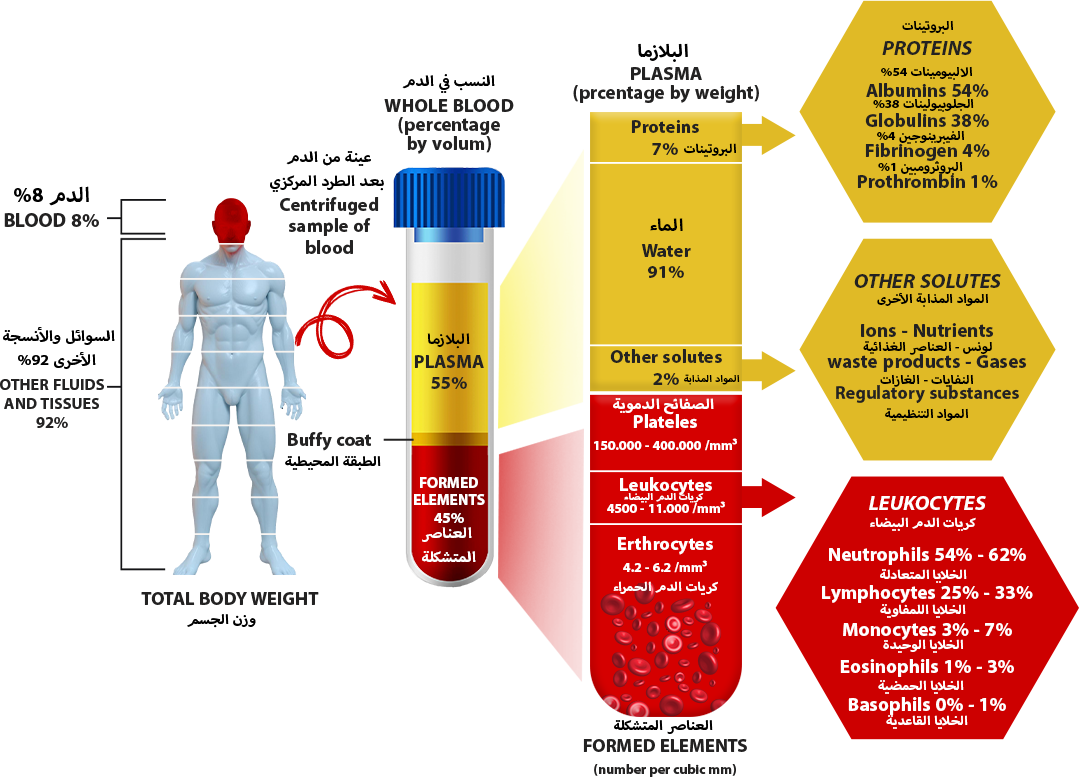


2- Formed Elements (45% of Blood Volume):
-
Erythrocytes (Red Blood Cells): Responsible for oxygen transport throughout the body, with a typical range of 4.2-6.2 million per cubic millimeter.
-
Leukocytes (White Blood Cells): Key players in the immune response, including:
-
Neutrophils (54-62%): Combat infection by engulfing and destroying bacteria.
-
Lymphocytes (25-33%): Produce antibodies and regulate immune responses.
-
Monocytes (3-7%): Remove dead or damaged tissues and help fight chronic infections.
-
Eosinophils (1-3%): Fight parasitic infections and contribute to allergic reactions.
-
Basophils (0-1%): Release histamine during allergic reactions.
-
-
Platelets: Small cell fragments that play a vital role in blood clotting and wound healing.
Main Components of Blood
1- Plasma (55% of Blood Volume): Plasma is a yellowish liquid that makes up 55% of the total blood volume. It consists primarily of:
-
Water (91%): The largest component of plasma, essential for transporting nutrients, hormones, and waste products.
-
Proteins (7%): Key proteins include:
-
Albumins (54%): Help maintain blood volume and pressure.
-
Globulins (38%): Play a critical role in the immune response.
-
Fibrinogen (4%): Involved in blood clotting.
-
Prothrombin (1%): Another important clotting factor.
-
-
Other solutes (2%): These include ions, nutrients, waste products, gases, and regulatory substances.
2- Formed Elements (45% of Blood Volume):
-
Erythrocytes (Red Blood Cells): Responsible for oxygen transport throughout the body, with a typical range of 4.2-6.2 million per cubic millimeter.
-
Leukocytes (White Blood Cells): Key players in the immune response, including:
-
Neutrophils (54-62%): Combat infection by engulfing and destroying bacteria.
-
Lymphocytes (25-33%): Produce antibodies and regulate immune responses.
-
Monocytes (3-7%): Remove dead or damaged tissues and help fight chronic infections.
-
Eosinophils (1-3%): Fight parasitic infections and contribute to allergic reactions.
-
Basophils (0-1%): Release histamine during allergic reactions.
-
-
Platelets: Small cell fragments that play a vital role in blood clotting and wound healing.
Buffy Coat
The Buffy coat is a thin layer of white blood cells and platelets that forms between the plasma and red blood cells when blood is centrifuged. Although it constitutes a small percentage of the blood, it contains crucial components for the body’s immune and clotting functions.
The Role of Stem Cells in Medical Research
Stem cells, particularly hematopoietic stem cells found in bone marrow and blood, are essential for replenishing the body's supply of blood cells. Their ability to differentiate into various types of blood cells has made them a focal point in research for treating blood disorders, cancers, and immune diseases.
At the I.D. Stem Cells and Genome Institute, led by Prof. Dr. Islam Dababseh, we are exploring the regenerative potential of stem cells to develop innovative treatments. These therapies aim to restore healthy blood cell production in patients with conditions such as leukemia, anemia, and other hematologic diseases.
Buffy Coat
The Buffy coat is a thin layer of white blood cells and platelets that forms between the plasma and red blood cells when blood is centrifuged. Although it constitutes a small percentage of the blood, it contains crucial components for the body’s immune and clotting functions.
The Role of Stem Cells in Medical Research
Stem cells, particularly hematopoietic stem cells found in bone marrow and blood, are essential for replenishing the body's supply of blood cells. Their ability to differentiate into various types of blood cells has made them a focal point in research for treating blood disorders, cancers, and immune diseases.
At the I.D. Stem Cells and Genome Institute, led by Prof. Dr. Islam Dababseh, we are exploring the regenerative potential of stem cells to develop innovative treatments. These therapies aim to restore healthy blood cell production in patients with conditions such as leukemia, anemia, and other hematologic diseases.
Our research focuses on:
Stem Cell Therapy: Using stem cells to regenerate damaged tissues, especially in blood-related conditions.
Hematopoietic Stem Cells: Researching their application in bone marrow transplants to treat blood cancers and immune system deficiencies.
Blood Clotting Disorders: Investigating how stem cells can be used to regenerate healthy platelets and improve blood clotting mechanisms in patients with bleeding disorders.
Through cutting-edge stem cell research, our institute is at the forefront of developing novel therapies that have the potential to transform patient outcomes and offer new hope in treating blood-related diseases.
Our research focuses on:
Stem Cell Therapy: Using stem cells to regenerate damaged tissues, especially in blood-related conditions.
Hematopoietic Stem Cells: Researching their application in bone marrow transplants to treat blood cancers and immune system deficiencies.
Blood Clotting Disorders: Investigating how stem cells can be used to regenerate healthy platelets and improve blood clotting mechanisms in patients with bleeding disorders.
Through cutting-edge stem cell research, our institute is at the forefront of developing novel therapies that have the potential to transform patient outcomes and offer new hope in treating blood-related diseases.