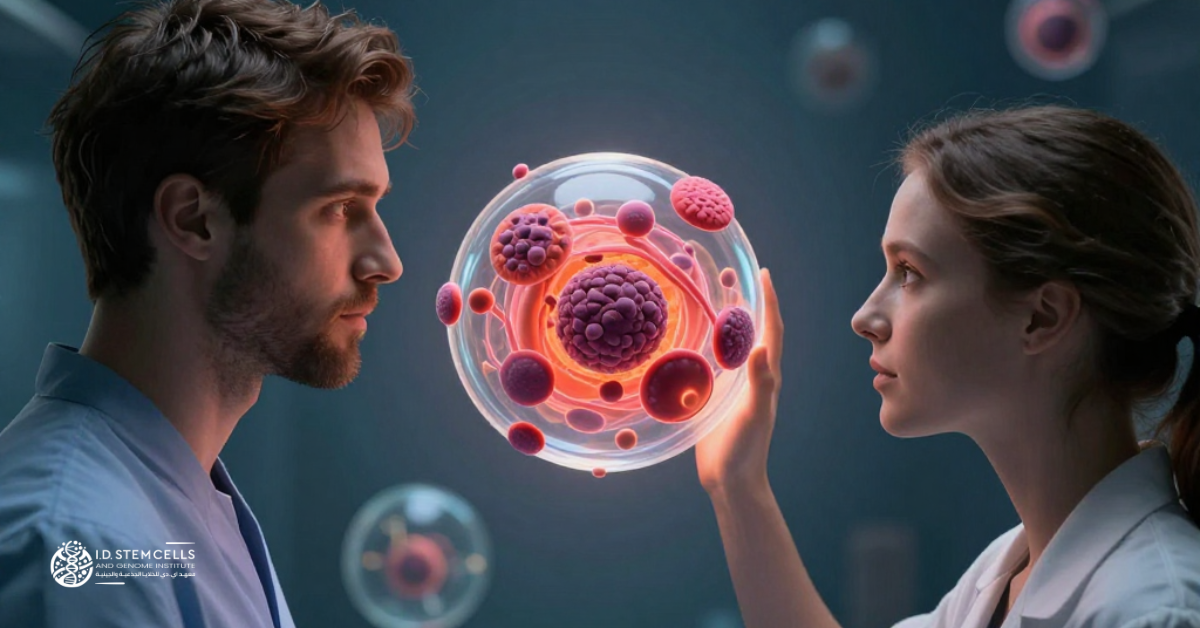
Stem cells represent one of the most promising therapeutic innovations in reproductive medicine, demonstrating a unique ability to repair tissues and activate hormonal functions responsible for fertility in both men and women. Recent research focuses on how these cells, particularly mesenchymal stem cells, can enhance the production of reproductive hormones such as testosterone and estrogen, thereby improving the chances of conception.
Key Hormones Responsible for Fertility
The hypothalamic-pituitary-gonadal axis (HPG) is the primary hormonal system that regulates fertility and reproduction in the human body. It controls ovulation in women and sperm production in men, and connects:
Key Hormones Responsible for Fertility
The hypothalamic-pituitary-gonadal axis (HPG) is the primary hormonal system that regulates fertility and reproduction in the human body. It controls ovulation in women and sperm production in men, and connects:
The hypothalamus
The pituitary gland
The gonads (ovaries in females and testes in males). The HPG axis includes key hormones such as follicle-stimulating hormone (FSH) and luteinizing hormone (LH), which are secreted by the pituitary gland. It also includes hormones secreted by the gonads, such as testosterone in men and estrogen and progesterone in women.
Any disruption to this hormonal system can lead to impaired fertility and infertility, whether due to decreased hormone production or impaired cell receptors for these hormones, as seen in cases of premature menopause or low sperm count.
The hypothalamus
The pituitary gland
The gonads (ovaries in females and testes in males). The HPG axis includes key hormones such as follicle-stimulating hormone (FSH) and luteinizing hormone (LH), which are secreted by the pituitary gland. It also includes hormones secreted by the gonads, such as testosterone in men and estrogen and progesterone in women.
Any disruption to this hormonal system can lead to impaired fertility and infertility, whether due to decreased hormone production or impaired cell receptors for these hormones, as seen in cases of premature menopause or low sperm count.
The Effect of Stem Cells on Men
Stem cells improve testicular function by activating spermatogonial stem cells, which enhances testosterone and FSH/LH secretion. Recent studies have shown an increase in sex hormone levels of up to 30% after injecting mesenchymal stem cells (MSCs) into the testicles, along with improved sperm quality in patients with endocrine infertility.
The Effect of Stem Cells on Men
Stem cells improve testicular function by activating spermatogonial stem cells, which enhances testosterone and FSH/LH secretion. Recent studies have shown an increase in sex hormone levels of up to 30% after injecting mesenchymal stem cells (MSCs) into the testicles, along with improved sperm quality in patients with endocrine infertility.
The Effect of Stem Cells on Women
In women, stem cells replenish ovarian reserve by secreting growth factors such as VEGF and IGF, which stimulate estrogen production and increase AMH levels, an indicator of ovarian reserve. Clinical research has reported improved endometrial thickness and an increased number of mature eggs, particularly in cases of premature ovarian failure, when stem cell therapies are used in women.
The Effect of Stem Cells on Women
In women, stem cells replenish ovarian reserve by secreting growth factors such as VEGF and IGF, which stimulate estrogen production and increase AMH levels, an indicator of ovarian reserve. Clinical research has reported improved endometrial thickness and an increased number of mature eggs, particularly in cases of premature ovarian failure, when stem cell therapies are used in women.
Key Biological Mechanisms of Stem Cells
Stem cells secrete anti-inflammatory factors such as IL-10 and angiogenic factors, reducing chronic inflammation that impairs hormone secretion. They also improve the microenvironment of the gonads, reactivating local stem cells without direct differentiation into hormone-producing cells. Stem cell research offers promising prospects for rebalancing the hormonal systems responsible for fertility in both men and women by enhancing reproductive function and repairing damaged tissue.
At the I.D. Stem Cells and Genome Institute, we keep abreast of the latest scientific developments in the field of stem cell and gene therapy and regenerative medicine. If you are interested in learning more about the potential benefits of these treatments and the latest research findings, please feel free to contact us.
Key Biological Mechanisms of Stem Cells
Stem cells secrete anti-inflammatory factors such as IL-10 and angiogenic factors, reducing chronic inflammation that impairs hormone secretion. They also improve the microenvironment of the gonads, reactivating local stem cells without direct differentiation into hormone-producing cells. Stem cell research offers promising prospects for rebalancing the hormonal systems responsible for fertility in both men and women by enhancing reproductive function and repairing damaged tissue.
At the I.D. Stem Cells and Genome Institute, we keep abreast of the latest scientific developments in the field of stem cell and gene therapy and regenerative medicine. If you are interested in learning more about the potential benefits of these treatments and the latest research findings, please feel free to contact us.