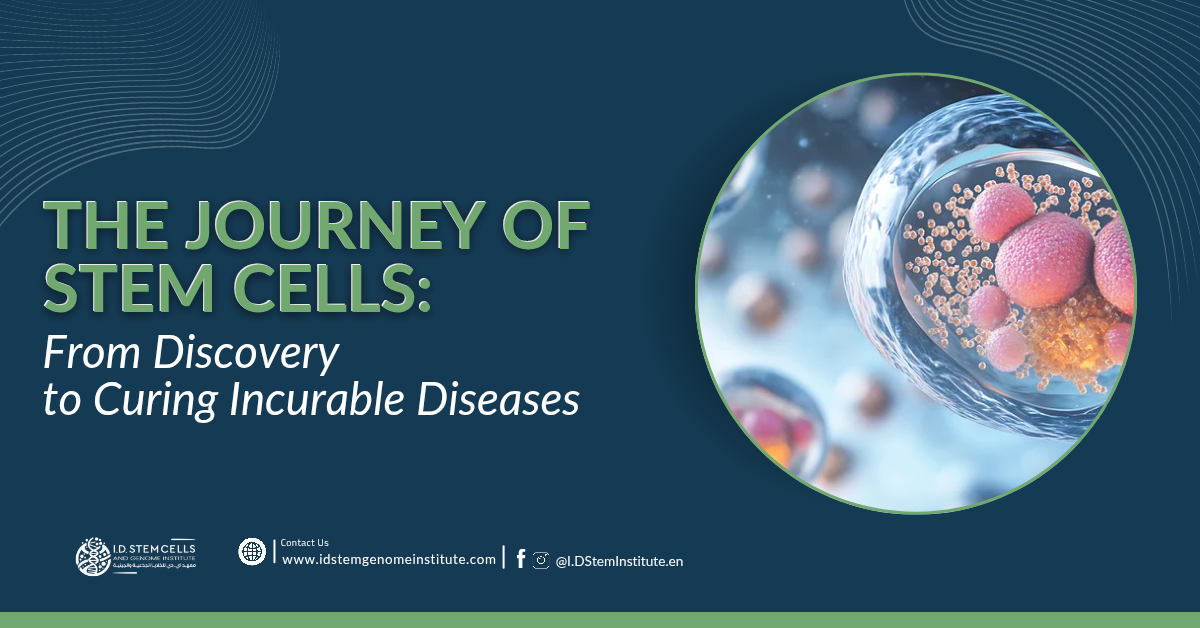
Stem cells have undergone a long journey of discovery and development, beginning in the mid-20th century and continuing to the present day. Research into them has advanced significantly, leading to a deeper understanding of their therapeutic potential for various diseases, particularly neurological diseases.
Early Discoveries and Identification of Stem Cells:
Stem cells were first discovered in blood regeneration research, where research showed that cells in bone marrow could be pluripotent and had the ability to differentiate into multiple types of blood cells. Later, scientists succeeded in isolating human embryonic stem cells for the
Early Discoveries and Identification of Stem Cells:
Stem cells were first discovered in blood regeneration research, where research showed that cells in bone marrow could be pluripotent and had the ability to differentiate into multiple types of blood cells. Later, scientists succeeded in isolating human embryonic stem cells for the first time, marking a paradigm shift in biomedical research. Stem cells can be classified into two main groups based on their key properties: embryonic stem cells and adult stem cells.

first time, marking a paradigm shift in biomedical research. Stem cells can be classified into two main groups based on their key properties: embryonic stem cells and adult stem cells.
Evolving Uses of Stem Cells:
Stem cell-based therapies have shown great potential in treating various neurological diseases. Stem cells can differentiate into various types of neurons, promote nerve regeneration, and modulate immune responses, making them a promising tool for treating neurodegenerative diseases and central nervous system injuries. Mesenchymal stem cells have the potential to regenerate tissue and modulate the immune system, and are used to treat inflammatory conditions or for regenerative purposes.
Evolving Uses of Stem Cells:
Stem cell-based therapies have shown great potential in treating various neurological diseases. Stem cells can differentiate into various types of neurons, promote nerve regeneration, and modulate immune responses, making them a promising tool for treating neurodegenerative diseases and central nervous system injuries. Mesenchymal stem cells have the potential to regenerate tissue and modulate the immune system, and are used to treat inflammatory conditions or for regenerative purposes.
Stem Cell Delivery Techniques:
Intrathecal stem cell therapy is used to treat various neurological diseases. Stem cells can cross the blood-brain barrier and reach brain tissue via intranasal administration, providing a non-invasive method for targeting the central nervous system. Intra-arterial stem cell delivery can also improve brain damage and restore neural connectivity.
Stem Cell Delivery Techniques:
Intrathecal stem cell therapy is used to treat various neurological diseases. Stem cells can cross the blood-brain barrier and reach brain tissue via intranasal administration, providing a non-invasive method for targeting the central nervous system. Intra-arterial stem cell delivery can also improve brain damage and restore neural connectivity.
Challenges and Future Directions:
To maximize the potential of stem cell therapy, new therapeutic options must be developed that increase the survival of transplanted cells. Stem cell-based 3D models can better mimic the natural environment and are used to study disease mechanisms and test potential treatments. Identifying the molecular characteristics of specific neuronal cell types is crucial for disease modeling and developing regenerative therapies. The use of 3D bioprinting to create complex structures that mimic natural tissue is also a promising future direction.
Challenges and Future Directions:
To maximize the potential of stem cell therapy, new therapeutic options must be developed that increase the survival of transplanted cells. Stem cell-based 3D models can better mimic the natural environment and are used to study disease mechanisms and test potential treatments. Identifying the molecular characteristics of specific neuronal cell types is crucial for disease modeling and developing regenerative therapies. The use of 3D bioprinting to create complex structures that mimic natural tissue is also a promising future direction.
Stem Cell Applications in Various Diseases:
Alzheimer's Disease: Improving Memory and Reducing Loss of Cognitive and Language Abilities
Parkinson's Disease: Replacing Lost Neurons in the Brain
Multiple Sclerosis: Regulating Autoimmunity and Regenerating Neurons
Spinal Cord Injuries: Repairing Damaged Neuronal Tissue and Enhancing Neurological Function
In general, stem cells have witnessed significant advances since their discovery and hold promising therapeutic potential for a wide range of diseases, particularly neurological diseases. However, further research is still needed to overcome challenges and improve the efficacy and safety of stem cell-based therapies.
Stem Cell Applications in Various Diseases:
Alzheimer's Disease: Improving Memory and Reducing Loss of Cognitive and Language Abilities
Parkinson's Disease: Replacing Lost Neurons in the Brain
Multiple Sclerosis: Regulating Autoimmunity and Regenerating Neurons
Spinal Cord Injuries: Repairing Damaged Neuronal Tissue and Enhancing Neurological Function
In general, stem cells have witnessed significant advances since their discovery and hold promising therapeutic potential for a wide range of diseases, particularly neurological diseases. However, further research is still needed to overcome challenges and improve the efficacy and safety of stem cell-based therapies.
About the ID Stem Cell and Gene Institute:
The institute combines the latest scientific research and clinical expertise to provide advanced, personalized treatments for chronic diseases, injuries, and complex conditions. Led by Dr. Islam Dababseh, the institute comprises an elite group of physicians and researchers committed to improving patients' quality of life through a precise and comprehensive therapeutic approach. The institute also aims to raise the level of medical knowledge in the field of stem cells through awareness and ongoing training. To schedule an immediate consultation with experts at the ID Stem Cell and Gene Institute, click here.
About the ID Stem Cell and Gene Institute:
The institute combines the latest scientific research and clinical expertise to provide advanced, personalized treatments for chronic diseases, injuries, and complex conditions. Led by Dr. Islam Dababseh, the institute comprises an elite group of physicians and researchers committed to improving patients' quality of life through a precise and comprehensive therapeutic approach. The institute also aims to raise the level of medical knowledge in the field of stem cells through awareness and ongoing training. To schedule an immediate consultation with experts at the ID Stem Cell and Gene Institute, click here.