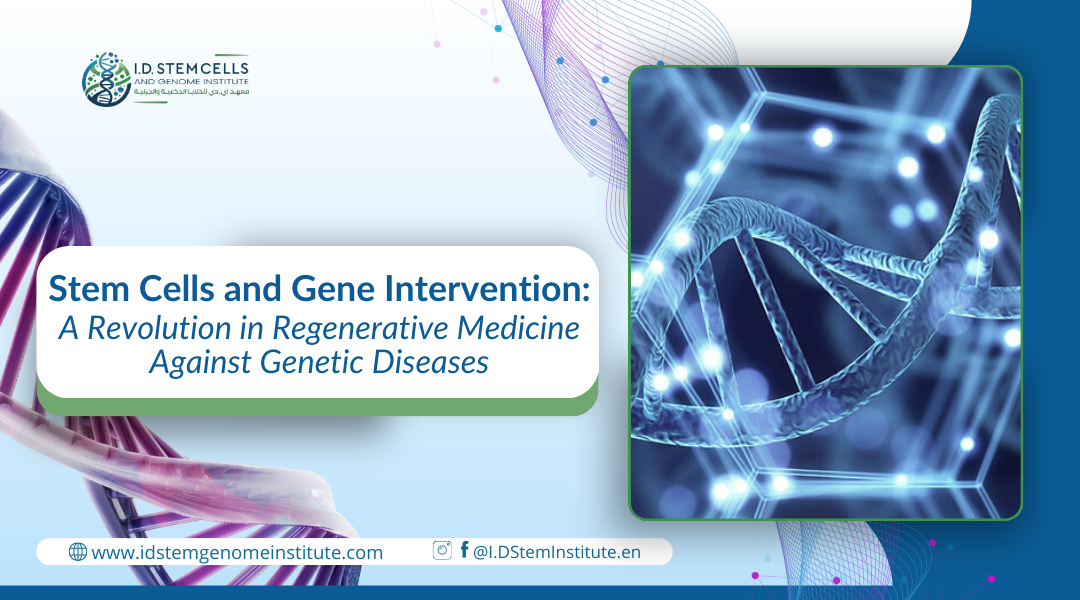
Genetic diseases pose a formidable challenge to conventional medicine, as they arise from defects in the basic genetic code of cells. However, stem cells have emerged as a cornerstone in the development of modern therapeutic strategies, where cell biology and gene therapy converge to offer radical solutions that go beyond simply managing symptoms to correcting the genetic causes of diseases.
Integrating Stem Cells and Gene Editing
The intrinsic power of stem cells lies in their remarkable ability to self-renew and differentiate into specialized cell types. These properties make them an ideal tool for replacing damaged tissue in organs that lack the natural capacity for regeneration. This field has witnessed a qualitative leap with the integration of CRISPR-Cas9 technology, enabling scientists to precisely edit genes within stem cells before reimplanting them into the patient's body.
Integrating Stem Cells and Gene Editing
The intrinsic power of stem cells lies in their remarkable ability to self-renew and differentiate into specialized cell types. These properties make them an ideal tool for replacing damaged tissue in organs that lack the natural capacity for regeneration. This field has witnessed a qualitative leap with the integration of CRISPR-Cas9 technology, enabling scientists to precisely edit genes within stem cells before reimplanting them into the patient's body.
Hematopoietic Stem Cell (HSC) Applications
Treating inherited blood disorders, such as sickle cell anemia, is one of the most notable success stories in this field. The “additional gene therapy” strategy involves collecting hematopoietic stem cells from the patient and then using lentiviral vectors to introduce a healthy copy of the hemoglobin β gene.
Hematopoietic Stem Cell (HSC) Applications
Treating inherited blood disorders, such as sickle cell anemia, is one of the most notable success stories in this field. The “additional gene therapy” strategy involves collecting hematopoietic stem cells from the patient and then using lentiviral vectors to introduce a healthy copy of the hemoglobin β gene. These modified cells then settle in the bone marrow and begin producing normal red blood cells sustainably, resulting in a long-term apparent cure and reducing the need for continuous blood transfusions.
These modified cells then settle in the bone marrow and begin producing normal red blood cells sustainably, resulting in a long-term apparent cure and reducing the need for continuous blood transfusions.
Disease Modeling via Induced Polymorphic Stem Cells (iPSCs)
The recent discovery of induced pluripotent stem cells (iPSCs) has revolutionized the understanding of disease mechanisms. By reprogramming a patient’s somatic cells using factors such as OCT4 and SOX2, scientists can create a cellular model with the same genetic signature as the patient. This allows for the correction of mutations in vitro and then the stimulation of cells to differentiate into nerve or cardiac cells to study the effect of treatment. The success of this approach was demonstrated in the treatment of Pompe disease, where cellular function was restored after repair of the mutated GAA gene.
Disease Modeling via Induced Polymorphic Stem Cells (iPSCs)
The recent discovery of induced pluripotent stem cells (iPSCs) has revolutionized the understanding of disease mechanisms. By reprogramming a patient’s somatic cells using factors such as OCT4 and SOX2, scientists can create a cellular model with the same genetic signature as the patient. This allows for the correction of mutations in vitro and then the stimulation of cells to differentiate into nerve or cardiac cells to study the effect of treatment. The success of this approach was demonstrated in the treatment of Pompe disease, where cellular function was restored after repair of the mutated GAA gene.
The Regenerative Role of Mesenchymal Stem Cells (MSCs)
The importance of stem cells extends beyond cell replacement to include their immunological properties. Mesenchymal stem cells are notable for their ability to secrete extracellular vesicles rich in proteins and miRNAs that act as anti-inflammatories and tissue regeneration stimulators. Furthermore, the pre-transplantation bioengineering of these cells enhances their survival capabilities within damaged microenvironments.
The Regenerative Role of Mesenchymal Stem Cells (MSCs)
The importance of stem cells extends beyond cell replacement to include their immunological properties. Mesenchymal stem cells are notable for their ability to secrete extracellular vesicles rich in proteins and miRNAs that act as anti-inflammatories and tissue regeneration stimulators. Furthermore, the pre-transplantation bioengineering of these cells enhances their survival capabilities within damaged microenvironments.
Challenges and Future Prospects
Despite these achievements, stem cell applications face technical and ethical hurdles, including the risk of tumorigenesis, the difficulty of fully controlling cell differentiation, and the high costs. However, the trend toward personalized and precision medicine, supported by 3D organ printing technologies and the development of "miniature organs" (organoids), promises a future where genetic diseases are less likely to be treated with the precision of gene therapy. At the I.D. Stem Cells and Genome Institute, we keep abreast of the latest scientific developments in the field of stem cell and gene therapy and regenerative medicine. If you are interested in learning more about the potential benefits of these treatments and the latest research findings, please feel free to contact us.
Challenges and Future Prospects
Despite these achievements, stem cell applications face technical and ethical hurdles, including the risk of tumorigenesis, the difficulty of fully controlling cell differentiation, and the high costs. However, the trend toward personalized and precision medicine, supported by 3D organ printing technologies and the development of "miniature organs" (organoids), promises a future where genetic diseases are less likely to be treated with the precision of gene therapy. At the I.D. Stem Cells and Genome Institute, we keep abreast of the latest scientific developments in the field of stem cell and gene therapy and regenerative medicine. If you are interested in learning more about the potential benefits of these treatments and the latest research findings, please feel free to contact us.